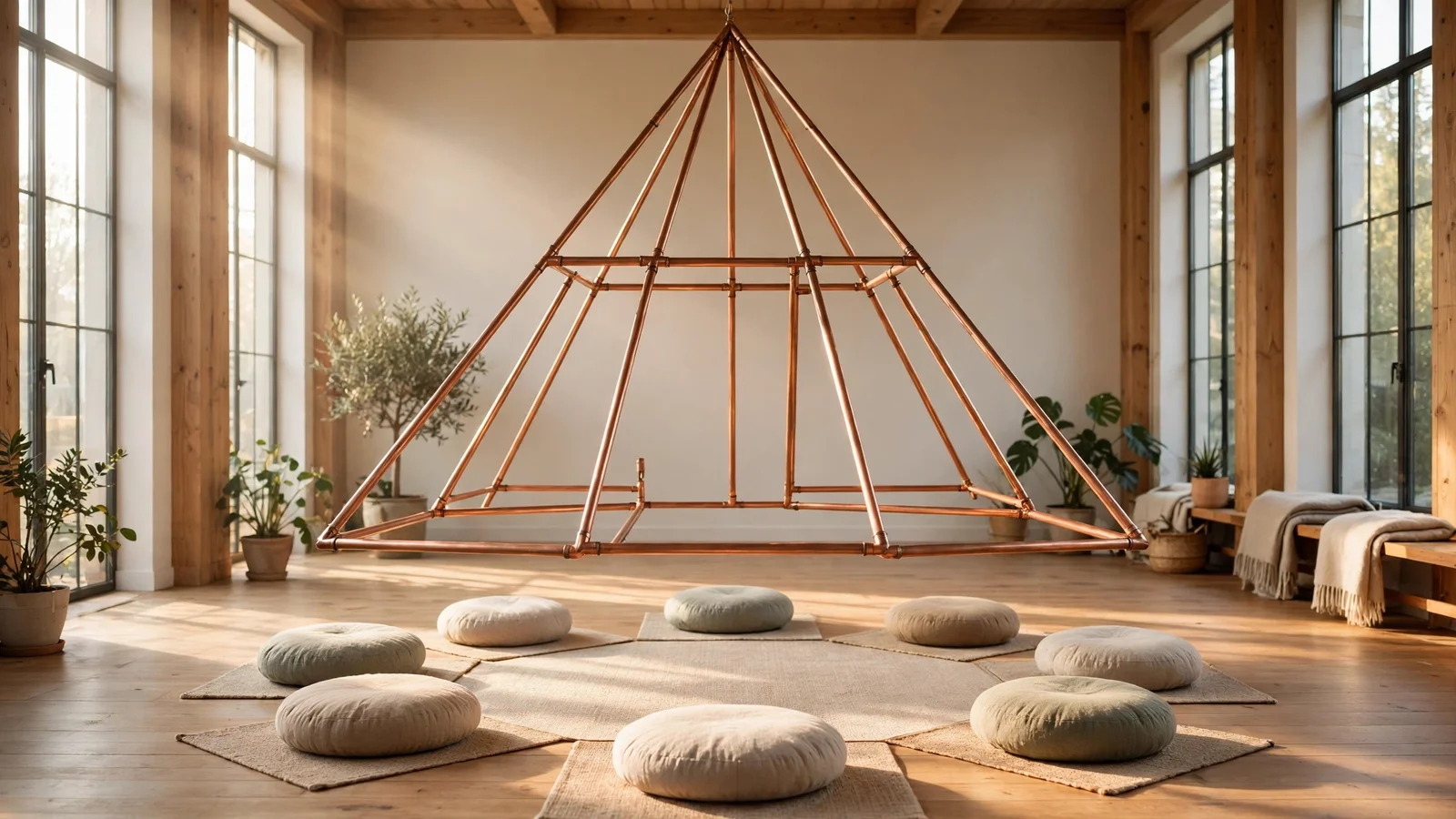
Meditating alone under a pyramid is a quiet, private practice. Meditating together under one is something else entirely: a shared stillness that regular practitioners describe as deeper, steadier, and easier to sustain than sitting alone. Group pyramid meditation — several people sitting in a circle inside or beneath a single large pyramid — is one of the oldest ways the pyramid is used, and one of the least written about. Here is how it works, who it suits, and how to run your first session without awkwardness.
What is group pyramid meditation?
Group pyramid meditation is simply several people meditating at the same time, in the same pyramid. The group sits in a circle — usually facing the centre, sometimes facing outward — inside a pyramid large enough to hold them, or beneath a suspended pyramid frame. Sessions typically run 20 to 45 minutes, often with a short guided opening and a silent close.
The practice comes from the same tradition as solo pyramid meditation: the pyramid's shape is said to focus and steady subtle energy, and meditators report deeper calm and fewer wandering thoughts inside it. In a group, practitioners add a second claim — that the shared intention of the circle amplifies the effect, the way a choir sounds fuller than a solo voice. Whether you read that energetically or psychologically (a room full of calm people is genuinely easier to be calm in), the practical result is the same: most people find group sessions easier to settle into than solo ones.
Why meditate together under a pyramid?
Accountability. The most common reason people join a group is also the most ordinary: they actually show up. A fixed time, a circle expecting you, and a shared start make a practice stick in a way a private intention rarely does.
Depth. Beginners often report that their first deep, quiet sit happened in a group — the collective stillness acts like training wheels for attention. Experienced meditators say the same in reverse: a settled group helps them drop faster into their practice.
Shared energy. In pyramid tradition, the group is said to pool and circulate energy within the pyramid's field — each person's calm reinforcing the others'. Even sceptics of that framing usually concede the social fact underneath it: calm is contagious, and a room that breathes together settles together.
Learning. Groups are where technique is passed on — breathing methods, posture adjustments, and the small practical wisdom (where to sit, what to do with restless legs) that no book quite conveys. Our guide to pyramid meditation postures covers the sitting positions; a group is where you see them used well.
How a group session works, step by step
A typical group session follows a simple arc. Arrival (5 minutes): people arrive, remove shoes, and settle onto cushions in the circle without talking — or with only quiet greetings. Phones are silenced and left outside the pyramid.
Opening (3–5 minutes): the facilitator welcomes the group, states the session's intention (a theme, a dedication, or simply "sitting together"), and leads a few slow breaths. Some groups ring a bell or a singing bowl; some simply begin in silence.
The sit (20–30 minutes): silent meditation. The usual instruction is to follow the breath, or a mantra, or simply to sit in the pyramid's stillness. Nobody corrects anyone mid-sit. If someone needs to shift position, they do so quietly.
Closing (5 minutes): a bell or soft chime, a minute of stillness with eyes open, then a short sharing round — one sentence each, optional — and a thank-you. Groups that skip the sharing often find people linger and talk anyway; a structured close keeps the room calm as people leave.
Group size and seating: the practical numbers
The right size depends on the pyramid and the room, but a few rules of thumb hold across most groups:
| Group size | Seating | Best for |
|---|---|---|
| 2–4 people | Small circle, knees almost touching, facing centre | Families, close friends, first experiments |
| 5–8 people | Full circle inside a large pyramid | Weekly circles — the most common group size |
| 9–15 people | Two concentric circles or a wide circle under a suspended frame | Workshops, retreats, special sessions |
| 16+ people | Rows or a large circle in a hall with a suspended pyramid overhead | Public events — needs a facilitator and a timekeeper |
Leave at least a forearm's width between cushions so nobody's knees touch a neighbour's, and keep the centre of the circle empty — in pyramid tradition the centre is the focal point of the energy, and in practical terms it gives the facilitator somewhere to sit or place a bell. Sit facing the centre for a connected, inward feeling; face outward if the group prefers a sense of spaciousness. Either way, agree on it before the sit begins.
Choosing the pyramid for a group
A pyramid built for one person will not hold a circle. For groups, the usual choices are a large open-frame pyramid (copper or wood, big enough to sit inside — see our guide to choosing a meditation pyramid) or a suspended pyramid hung over the sitting area, which suits larger groups and halls because nothing stands on the floor between people.
Copper is the traditional group choice: light enough to move, easy to assemble, and — per our copper pyramid care guide — simple to maintain between sessions. Whatever the material, check the pyramid is stable before anyone sits under it, and align one face to true north if your tradition calls for it (many groups do; the practical benefit is a consistent setup every week).
If you have no pyramid yet, a group can also meet under a pyramid frame made of simple rods, or even visualise one — but most circles find that a real, physical pyramid changes the room in a way a visualisation does not, if only because everyone can see and respect the same boundary.
Roles: facilitator, timekeeper, and the circle
Small groups need only one role: a facilitator who opens and closes the session, keeps time, and holds the space. The facilitator does not teach during the sit — they set the frame and then sit like everyone else.
Larger groups add a timekeeper (often the same person with a bell) and, for public sessions, a greeter who welcomes newcomers, explains the basics, and handles late arrivals so the circle is not disturbed. Rotate the facilitator role monthly: it prevents the group from becoming one person's project, and every regular learns to hold a room.
Newcomers should get a two-minute orientation before their first sit — where to sit, how long the session runs, what to do if they need to leave early (stand quietly, bow or nod, and go). That small courtesy is the difference between a welcoming group and an intimidating one.
Group meditation etiquette
Arrive on time, leave quietly. Late arrivals wait outside until the opening breaths are done, then slip in silently. Early leavers signal the facilitator beforehand and leave between phases, not mid-silence.
No fixing, no talking during the sit. If a neighbour fidgets, coughs, or breathes loudly, that is part of the practice — noticing your reaction and letting it pass. Never tap, whisper, or correct anyone during meditation.
Keep sharing brief and personal. In the closing round, share your own experience, not advice for others. One sentence is enough; the group is not a therapy session.
Respect the pyramid. Do not lean on the frame, hang things from it, or place bags and bottles inside the circle. Keep the space clean — in pyramid practice, the upkeep of the space is part of the practice. The same care applies at home: if you also use a pyramid for rest, see our guide to sleeping under a pyramid.
Common challenges — and fixes
One restless person disturbs everyone. Normal, especially with beginners. Seat newcomers near the facilitator rather than in the middle, keep early sessions to 20 minutes, and remind the group that noticing distraction is the practice, not a failure.
Uneven experience levels. Mix the circle deliberately — do not seat all the beginners together. A settled meditator beside a restless one steadies the whole row, and beginners learn faster by sitting near calm than by being lectured about it.
The group becomes a social club. The sharing round stretches, tea runs long, and meditation shrinks. Fix it with structure: meditation first, socialising after, with a clear end time. The pyramid is the reason you gather; protect it.
Energy talk divides the room. Some members speak in energetic terms, others in psychological ones. Keep the shared language practical — breath, stillness, attention — and let each person hold their own interpretation privately. A group that argues about why it works will not last; a group that agrees on how it sits will.
Starting your own group
Start with three people and a fixed time — say, Tuesdays at 7 pm, 30 minutes, in a living room with a portable copper pyramid. Three is enough for a circle, small enough to be honest with, and large enough that one absence does not cancel the session.
Grow slowly and by invitation: ask each regular to bring one person, once, rather than advertising widely. A group that grows from trust stays calmer than one that grows from posters. After two months, if the circle is stable, consider a larger pyramid, a regular venue, and a shared cost for upkeep.
Keep the format boring — same time, same opening, same length — for at least three months before changing anything. Groups fail far more often from constant reinvention than from routine. If you would like guidance on setting up a pyramid space of your own, a consultation can help you choose the right pyramid and layout for your room and your group.
Group pyramid meditation: frequently asked questions
What is group pyramid meditation?
Group pyramid meditation is several people meditating at the same time inside or beneath a single large pyramid, usually seated in a circle. Sessions typically run 20 to 45 minutes, with a short guided opening, a silent sit, and a brief closing.
How many people can meditate under one pyramid?
It depends on the pyramid. A small portable pyramid suits 1–2 people; a large open-frame pyramid holds a circle of 5–8; suspended frames over a hall can hold 15 or more. Leave at least a forearm’s width between cushions and keep the centre of the circle empty.
Is group pyramid meditation better than meditating alone?
Most practitioners say group sessions are easier to settle into and easier to keep up, thanks to accountability and shared stillness. Solo practice allows deeper personal focus. The two complement each other — many people keep a daily solo sit and a weekly group session.
How long should a group pyramid meditation session last?
For beginners, 20 minutes of sitting plus a 5-minute opening and closing — about 30 minutes total. Established groups usually sit 30–45 minutes. Longer than 45 minutes suits retreats and experienced circles more than a weekly group.
Do I need experience to join a group pyramid meditation?
No. Most groups welcome complete beginners and give a two-minute orientation before the first sit — where to sit, how long the session runs, and what to do if you need to leave early. Sitting near the facilitator and starting with shorter sessions makes the first few times comfortable.
Can I meditate in a group pyramid at home?
Yes — a living room with a portable copper pyramid and three to four cushions is how most home groups start. Pick a fixed weekly time, keep the format simple, and grow by invitation. A consultation can help you choose the right pyramid size and layout for your room.
A circle is easier to keep than a solo promise
The honest secret of group pyramid meditation is not mystical at all: it is easier to sit still with other people than alone. The pyramid gives the circle a centre and a boundary; the circle gives each person a reason to return. Start with three people, a fixed time, and a simple format — and let the group do what no app or intention can: hold you to your own practice.
Get new readings in your inbox
One short email when a new angel-number guide or calculator goes live. No spam, ever.
Want to start a group session?
Get guidance on choosing the right pyramid, laying out your circle, and running your first session — from someone who has set up many.
Book a Consultation