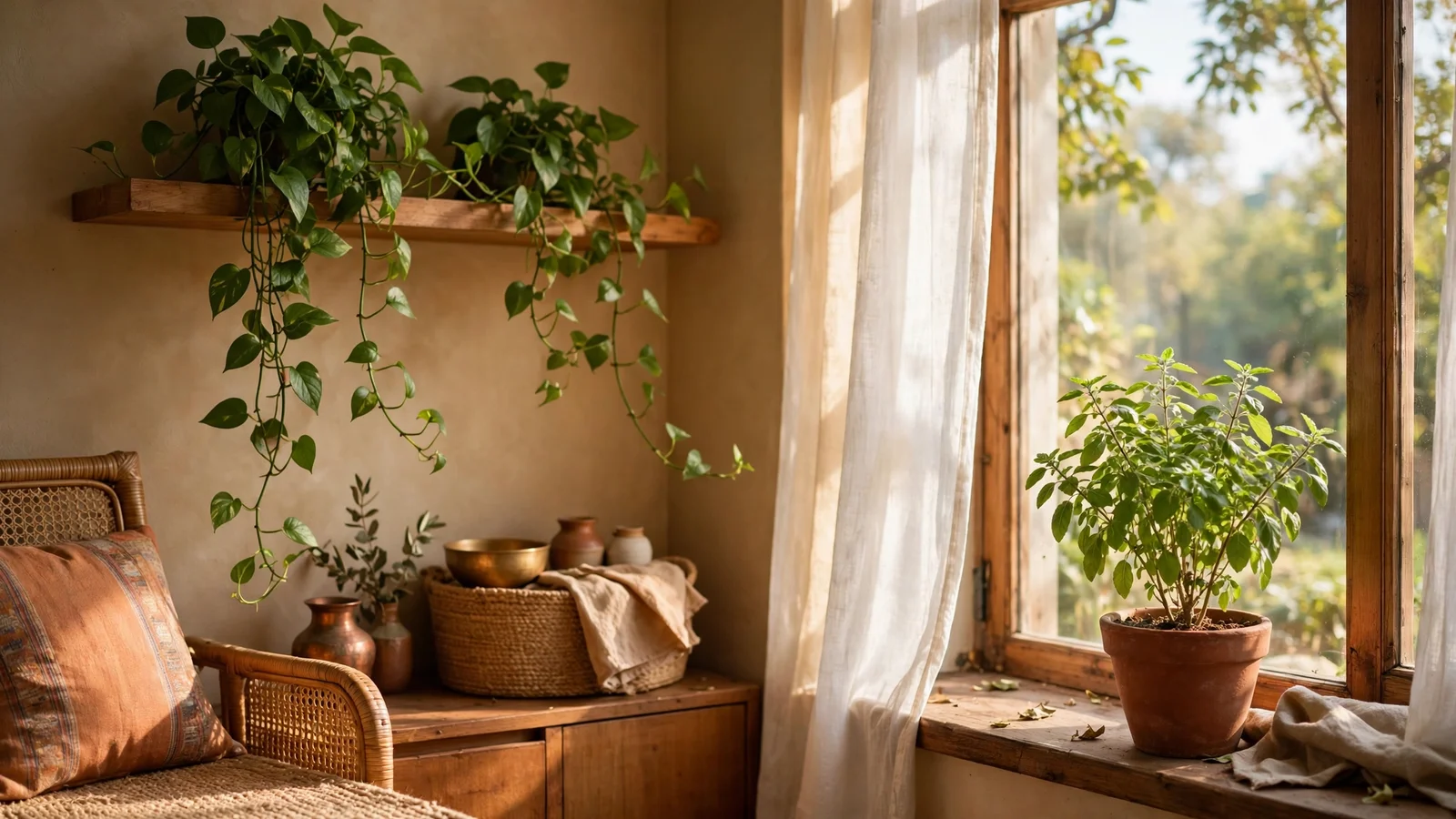
A plant is the easiest Vastu correction there is: no demolition, no expense, no specialist — just a pot in the right place. But which plant, and where, matters. In Vastu, plants are treated as living energy: the right plant in the right direction is said to refresh a room, while the wrong plant in the wrong place can quietly work against it. This guide covers the Vastu plants that matter most — tulsi, money plant, lucky bamboo, jade and more — with the directions, rooms, and care each one needs.
Why plants matter in Vastu
Vastu reads a home as a living system, and plants are its lungs. A healthy green plant is said to do three things at once: clean the air (which modern science agrees with), soften sharp corners and heavy energy, and mark a space as cared for — and a cared-for space is itself a Vastu principle. That is why plants appear in almost every Vastu remedy list, from bathroom thresholds to entrance corrections.
The rules are practical, not mystical. Plants belong where they can thrive — with light, air, and room to grow — because a dying plant is considered worse than no plant at all. A wilted, dusty plant in a dark corner is, in Vastu terms, stagnant energy made visible. The first rule of Vastu plants is therefore the simplest: keep them alive, clean, and well-placed — or do not keep them.
Tulsi: the sacred plant and where it belongs
Tulsi (holy basil) is the most revered plant in Vastu and in Hindu tradition generally — so sacred that it is traditionally given a place of its own rather than being treated as decoration. The classic placement is the north-east or east side of the home, ideally in the courtyard or near the entrance, where the morning sun reaches it. In flats, a sunny balcony or a bright window in the north-east corner works well.
Tulsi is traditionally kept in a clean, raised pot — often a dedicated tulsi vrindavan — and watered daily. The plant should never be allowed to dry out, and dead leaves should be removed promptly. Beyond its spiritual status, tulsi is a genuinely useful plant: it purifies the air, repels some insects, and its leaves are used in home remedies. Keep it near the pooja room or entrance rather than in the bedroom or bathroom, and never place it beside the toilet — our guide to Vastu bathroom & toilet direction explains why that zone needs different remedies.
Money plant: the prosperity climber
The money plant is the most popular Vastu plant for prosperity — and the most commonly misplaced. The traditional rule is to keep it in the south-east corner of the home or living room, the direction associated with wealth, and to let it climb upwards: a money plant trailing on the floor is said to let prosperity slip away, while one climbing a moss stick or trellis is said to draw it up.
Practically, the money plant is a forgiving, fast-growing climber that thrives in indirect light and in water or soil — which is part of its popularity. Keep its leaves glossy and green, prune dead stems, and never let it dry out completely. One caution from tradition: do not keep a money plant in the north-east corner (that direction belongs to tulsi and to spiritual energy, not to money), and do not gift your own plant away — the tradition says prosperity follows the plant. If you are choosing a home layout around prosperity generally, our Vastu plot selection guide covers the bigger picture.
Lucky bamboo, jade, and other lucky indoor plants
Lucky bamboo is a Vastu and feng shui favourite for the east or south-east, traditionally kept in water with pebbles. The number of stalks matters in the tradition: 3 for happiness, 5 for health, 8 for wealth — and 4 is avoided. Keep the water fresh and the stalks green; yellowing bamboo should be trimmed or replaced.
Jade plant — sometimes called the money tree — suits the entrance or the south-east, where its round, coin-shaped leaves are read as stored wealth. It needs bright light and very little water, which makes it ideal for people who forget to water. Snake plant is valued for the bedroom and living room: it releases oxygen at night and tolerates low light, though tradition prefers it away from the main entrance. Peace lily suits the living room or study for calm and clean air; areca palm suits large living rooms and corners, softening sharp edges.
For the entrance specifically — the most important threshold in the house — a pair of healthy potted plants flanking the door is the classic Vastu welcome. Our Vastu main entrance guide covers the door itself; the plants are the finishing touch.
Best directions for Vastu plants
Direction is the heart of Vastu plant placement. The table below is the quick reference most practitioners use:
| Plant | Best direction | Avoid | Note |
|---|---|---|---|
| Tulsi | North-east or east | Bedroom, bathroom, south | Raised pot, morning sun, water daily |
| Money plant | South-east | North-east, trailing on the floor | Let it climb upwards, keep leaves glossy |
| Lucky bamboo | East or south-east | Bedroom in large numbers | Fresh water, 3/5/8 stalks; avoid 4 |
| Jade plant | Entrance or south-east | Dark corners, bathroom | Bright light, very little water |
| Snake plant | Bedroom, living room corners | Main entrance | Releases oxygen at night; low light OK |
| Peace lily | Living room, study | Direct harsh sun | Calm energy; keep soil moist |
| Areca palm | Living room, large corners | Cramped spaces | Softens sharp corners; needs space |
When a home has no clear north-east or south-east — common in flats — use the direction of the room itself: the south-east corner of the living room for the money plant, the brightest east-facing window for tulsi. Intention plus light matters more than a compass-perfect corner.
Plants to avoid indoors as per Vastu
Not every plant belongs inside. The most widely cited avoid-list in Vastu is: cactus and thorny plants (except a small cactus near a window for protection, which some traditions allow — indoors generally not), bonsai (tradition reads stunted growth as stunted progress), dead or dried plants and flowers (stagnant energy), and milky-sap plants kept where children or pets can reach them.
Creepers inside the house are also traditionally discouraged except for the money plant, which is the one climbing exception — other creepers are said to tangle a home's energy. And large trees too close to the house — especially in the north-east — are avoided because they block morning light and air; that is a plot-level rule, covered in our Vastu plot selection guide. The principle behind all of these: a plant should bring light, growth, and ease — anything that brings thorns, decay, or obstruction works against the room.
Plant care as Vastu care
In Vastu, how you keep a plant matters as much as where you keep it. A thriving plant is good Vastu; a neglected one is not. The weekly routine is simple: water on schedule, wipe dusty leaves, remove dead leaves and flowers immediately, rotate pots so growth stays even, and repot when roots crowd the pot.
Choose pots with drainage, and avoid keeping plants in broken or cracked pots — tradition reads a cracked pot as a cracked foundation, and practically it leaks and stains. Terracotta and ceramic suit tulsi and jade; glass or ceramic suits lucky bamboo; avoid keeping any plant in a rusted metal container. If a plant dies despite care, replace it promptly rather than leaving an empty pot: an empty, dusty pot in a Vastu corner is worse than no pot at all.
Plants by room: entrance, living room, bedroom, study
Entrance: a pair of healthy potted plants flanking the door — jade, areca palm, or flowering plants in season. Keep the doorway itself clear and the plants trimmed so they frame, rather than block, the entrance.
Living room: the money plant in the south-east corner, a peace lily or areca palm for softness, and lucky bamboo on a side table. This is the room where plants do their most visible work, so keep them at their best here.
Bedroom: keep it light — one or two air-purifying plants such as snake plant or peace lily, never a jungle. Tradition warns against too many plants in the bedroom (they are said to compete for the room's energy at night), and our Vastu bedroom guide covers the room's other rules. No thorny plants, no dried flowers.
Study: lucky bamboo on the desk for focus, and a small jade plant for steady progress. Keep the desk plant small — a large plant on a study desk crowds the work and the mind. If the study doubles as a child's room, a money plant climbing a small trellis is a popular choice.
Small homes and balconies
Flats and small homes need the same principles in miniature. A balcony is the best Vastu plant space in a flat: tulsi in the north-east corner of the balcony, a money plant climbing the railing in the south-east, and a few flowering plants for colour. Balcony plants also soften the hard edges of apartment living and give the home a green threshold.
Inside, use vertical space: wall-mounted planters, hanging planters near windows, and a single statement plant in the living room rather than many small ones scattered about. One healthy plant per room, well-placed and well-kept, does more than five struggling ones. And if your home has no balcony and little light, choose low-light survivors — snake plant, money plant, ZZ plant — rather than fighting the light with a plant that will slowly fail.
Vastu plants: frequently asked questions
Which plant is best for home as per Vastu?
Tulsi is considered the best and most sacred plant for a home, kept in the north-east or east. For prosperity, the money plant in the south-east is the classic choice; lucky bamboo in the east suits happiness and health. The best plant is the one that thrives in your light and that you will actually care for.
Where should tulsi be kept as per Vastu?
Tulsi belongs in the north-east or east side of the home, ideally in the courtyard or near the entrance where the morning sun reaches it. In a flat, a sunny balcony or a bright north-east window works. Keep it in a clean, raised pot, water it daily, and never place it in the bedroom or bathroom.
Where should the money plant be kept as per Vastu?
The money plant belongs in the south-east corner of the home or living room — the direction associated with wealth — and it should be allowed to climb upwards on a moss stick or trellis, never trail on the floor. Avoid the north-east corner, keep the leaves glossy and green, and prune dead stems promptly.
Which plants are unlucky as per Vastu?
Cactus and thorny plants, bonsai, and dead or dried plants are the most commonly cited unlucky choices indoors. Creepers other than the money plant are also traditionally discouraged inside the house. The rule behind the list: a plant should bring light, growth, and ease — thorns, decay, and obstruction work against a room.
Can I keep plants in the bedroom as per Vastu?
Yes, but keep it light — one or two air-purifying plants such as snake plant or peace lily. Tradition warns against too many plants in the bedroom and against thorny plants or dried flowers there. A snake plant is a popular bedroom choice because it releases oxygen at night and tolerates low light.
How many plants should I keep at home as per Vastu?
There is no fixed lucky number — one healthy plant per room, well-placed and well-kept, is the usual guidance. A living room can hold two or three; a bedroom one or two. More important than the count is the condition: thriving plants are good Vastu, and neglected or dying plants are worse than none.
Start with one pot in the right corner
You do not need a garden to use Vastu plants — you need one healthy plant in the right direction. Tulsi in the north-east, money plant climbing in the south-east, and a snake plant in the bedroom will change how a home feels within a week, and they cost almost nothing. If your layout is unusual or you are unsure which corners are which, a Vastu consultation can map your home's directions and place every plant with confidence.
Get new readings in your inbox
One short email when a new angel-number guide or calculator goes live. No spam, ever.
Not sure your plants are in the right place?
Get a Vastu assessment of your home’s directions — and a plant placement plan tuned to your rooms, light, and floor plan.
Book a Consultation